The Fabulous Mrs. V.

The Fabulous Mrs. V.

H. E. Bates

H. E. Bates

First published in 1964, The Fabulous Mrs. V. is a late collection of twelve stories celebrating comedy and Bates's ability to paint amusing, idiosyncratic women.'A Couple of Fools' follows two fashionable young women, ripe for a luxurious Sunday afternoon outing, who find that their flamboyant hats win them attention and favours at every step. They and their male admirers become too drunk for anything but a taxi home. Another story similarly celebrates liquor, food, and sex. 'A Party for the Girls' is a comic celebration of life where a group of older women drink lavish quantities of alcohol at a luncheon and compete for the attention of the sole male guest.'The Trespasser' is a comic piece involving a near-sighted and eccentric spinster 'who looked not at all unlike a round fresh radish,' and a young man who watches with some disgust as his aunt orchestrates the seduction of her future husband. But it is not just the women who...
Read online
  • 618
The Black Boxer Tales

The Black Boxer Tales

H. E. Bates

H. E. Bates

The Black Boxer Tales, first published in 1932, H. E. Bates's third collection displays a growing emphasis on plot and characterisation, while amply displaying his established skill at creating plotless atmospheric pieces. Several stories explore a sense of a new and changing world of carnivals, economic challenges and traveling performers.The title story, 'The Black Boxer' is an intricate portrait of an aging boxer told against the backdrop of the colourful social lives of carnival workers. Having beaten a fighter twenty years his junior with a foul cut below the belt, he is left 'tired and stupefied and ashamed' in Bates's sensitive exploration of the human condition. Bates condsidered this tale, along with 'Charlotte Esmond', also in this collection, as accomplishing his difficult transition from a focus on mood to a focus on character, thereby projecting him 'into a new world' which he is clearly relishing and mastering. The rest of...
Read online
  • 539
An Aspidistra in Babylon

An Aspidistra in Babylon

H. E. Bates

H. E. Bates

First published in 1960, this collection of four novellas continue Bates's sensitive, often witty, explorations of unhappy love. The title story, 'An Aspidistra in Babylon', is a reminiscence of a girl's loss of innocence. Christine, who describes herself at eighteen as 'dull as one of the aspidistras that cluttered up ... our little boarding house' is seduced by the forty-year-old Captain Blaine, who charms her imagination with stories of a life on the Continent. 'A Month by the Lake' is a comedy of errors set in 1920s Lake Como revolving around two middle-aged vacationers unable to express their affection for each other. A film version starring James Fox, Vanessa Redgrave, and Uma Thurman was directed by John Irvin in 1995. Also featured in this collection is 'A Prospect of Orchards', as narrated by a familiarly mild-mannered Bates character, concerning unfolding affections and blossoming relationships in this quirky tale of extra-marital...
Read online
  • 319
The Yellow Meads of Asphodel

The Yellow Meads of Asphodel

H. E. Bates

H. E. Bates

Published posthumously in 1976, these stories include some familiar characters and scenarios, as well as an uncharacteristic vignette portraying urban hooligans.The title story, 'The Yellow Meads of Asphodel', looks at the apparently stagnant lives of a brother and sister, both in their forties, who live together in the country house left to them by their parents. Their lives are uprooted, however, when one of them falls in love.Two loved characters are revisited. Uncle Silas in 'Loss of Pride', where Silas recounts how he and his friends dealt with an obnoxious braggart and womanizer; and in 'The Proposal', published shortly after Bates's death, the story continues Bates's entertaining tales of Miss Shuttleworth.In 'The Lap of Luxury', a year after the end of war, two former pilots, Maxie and Roger, revisit France to trace Maxie's escape route from a prisoner of war camp. They separate, and Roger is taken in by a lovely, rich widow. But after...
Read online
  • 76
The Beauty of the Dead and Other Stories

The Beauty of the Dead and Other Stories

H. E. Bates

H. E. Bates

The Beauty of the Dead (Jonathan Cape, 1940) featuring fifteen stories, was released to critical acclaim. Pamela Hansford Johnson wrote in John O'London's Weekly that "all have that delicate luminosity by which visions are seen more clearly than in the bright sunlight." 'Old' is a snapshot of an elderly man – no longer appreciated or respected by his children and extended family – during a Sunday tea. He finds a companion in his seven-year-old grand-niece, making animal shapes out of biscuits and eventually falling into a "mesmeric peace" as she brushes his hair. There is a glimpse of Bates's childhood experiences in 'Quartette', written through the eyes of a music director. The story accounts the attraction between two of the singers which the director worries is breaking up the group, yet on their last song he can feel "the passionate quality of their singing transcending the small hot room and the small bewildered minds". Bates...
Read online
  • 68
The Song of the Wren

The Song of the Wren

H. E. Bates

H. E. Bates

Published in 1972, The Song of the Wren contains some light entertainments in the style of the Uncle Silas tales, alongside some more serious stories concerning thwarted love, love triangles, and, in two of the cases, the violence that comes out of psyches twisted by love. 'The Song of the Wren' features the intriguing Miss Shuttleworth as she spars with a young sociologist conducting a survey on various issues, leaving him dumfounded by her apparently mad behaviour and no more appreciative of nature than when he started. She appears again in 'Oh! Sweeter Than the Berry' where she proves herself more than a match for a visiting minister. Convincing him to try one homemade potion after another, she engages the tipsy Reverend in a theological debate until, stunned, he wobbles away and falls to his knees to pray for her.Taking a darker, more abstract turn 'The Man Who Loved Squirrels' is a tale of a woodsman who works alone and lives with his...
Read online
  • 64
The Triple Echo

The Triple Echo

H. E. Bates

H. E. Bates

Published in 1970, The Triple Echo was Bates's last significant novella, but one which he described as taking twenty-five years to complete.Set in the 1940s, the wife of a war prisoner lives in desperate loneliness and fear on an isolated farmstead. She encounters a young farmboy completely out of his element as a soldier, and the two carve out a relationship in defiance of the war around them. His decision to escape the military and to dress as his lover's sister to avoid detection eventually leads to tragedy. In a late essay Bates discusses the long evolution of the story's plot, conceived in 1943 with two sisters and completed in 1968 with just one, in what Bates calls 'an exceptional example of stumbling and groping or, if you will, of my own prolonged stupidity.' A film version starring Oliver Reed, Brian Deacon, and Glenda Jackson was premiered in November 1972, and issued in the United States with the title Soldiers in Skirts.
Read online
  • 59
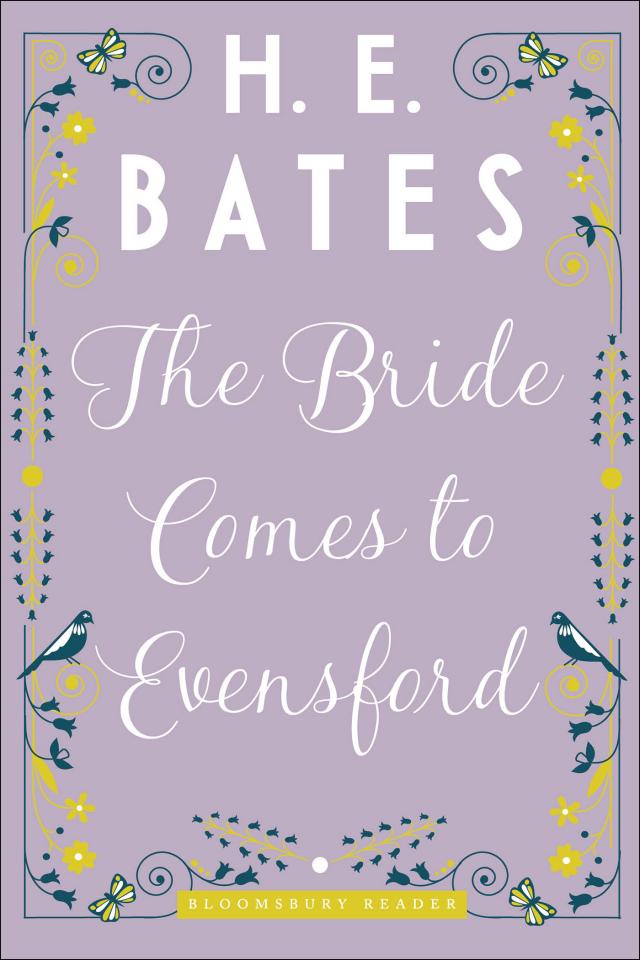
The Bride Comes to Evensford

The Bride Comes to Evensford

H. E. Bates

H. E. Bates

The Bride Comes to Evensford, a novella first published in 1943, follows a woman from her arrival in a small town (modelled on Bates's native Rushden) to her work for a draper, her marriage to him, her increasing command over the business and the household, and finally to her infatuation with a young man as a widow in her fifties. Written and published in the midst of Bates's work for the Air Ministry, but hearkening back in style and subject matter to his pre-war stories, this is a beautiful study of one woman's life, her hopes and disappointments. Philip Toynbee stated that it had "a fine elegant shape, covering with formidable skill a period of thirty years in only twice as many pages...Mr. Bates is a master of restraint...in a period of over-exuberance."
Read online
  • 58
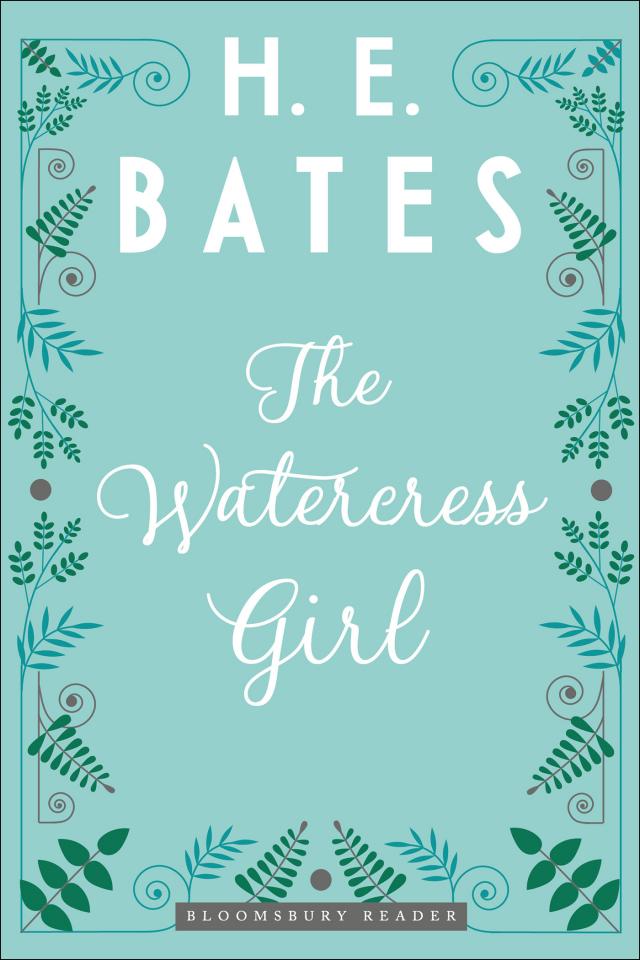
The Watercress Girl

The Watercress Girl

H. E. Bates

H. E. Bates

Stories about children are not always for children. In The Watercress Girl, H. E. Bates masterfully depicts a childhood which, by proxy, reveals the mystifying world of the adult. Through a series of short, lyrical stories, the complexities of the world are seen with crystalline purity through the eyes of children. We experience the joyous and painful clarity of youth, full of fears, hopes and make-believe, and the trust and mistrust of the adult world.A little boy, charmed by the golden-throated Miss Mortenson, witnesses her fall from grace in The Pemberton Thrush. Three children become entangled in a forbidden love when they witness a man attempting suicide in A Great Day for Bonzo, and a father reveals more of his past than he intends to in The Far Distant Journey.
Read online
  • 55
Love for Lydia

Love for Lydia

H. E. Bates

H. E. Bates

An honest and skilfully told love story' – New York Times Lydia – shy, sheltered, beautiful and just 19 – glides into Evensford one wintry day, stirring up feeling amongst the town's young men. But it is the young Mr Richardson that she befriends. As winter turns to drowsy summer, his world becomes a wondrous place, full only of Lydia; but a change comes over the once retiring girl as she discovers the effect she has on other men. As his closest friends fall under her spell, the love Richardson feels for Lydia becomes tangled with jealousy and resentment, a rift that may never be repaired. First published in 1952, Love for Lydia is a poignant look at love through the eyes of a boy growing up. Set amidst the hazy beauty of the English countryside and the crumbling splendour of the British upper classes, Bates demonstrates his ability to capture the complexities of human character, his remarkable talent for contrasting romance...
Read online
  • 50
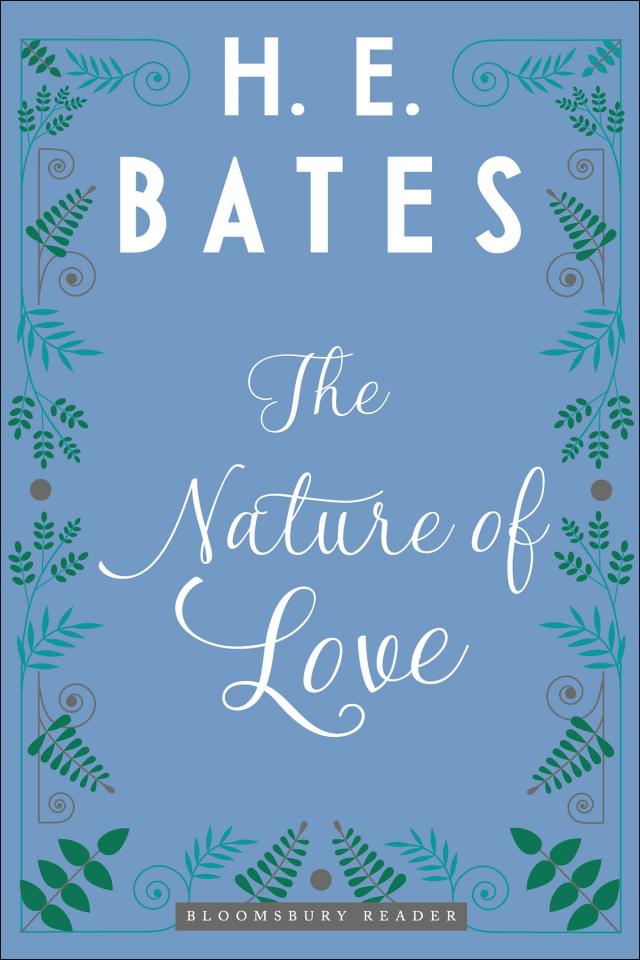
The Nature of Love

The Nature of Love

H. E. Bates

H. E. Bates

The Nature of Love (Michael Joseph, 1953) was Bates's first published collection of novellas.It contains three stories, different in weight but similar in texture, drawing from rural landscapes and the sensitive, poignant studies of the people that bring them to life. Dulcima, dedicated to W. Somerset Maugham, is a tale of a simple girl in rural England whose manipulation of both an old widower and a young forest worker has tragic results. In 1971, EMI Productions released a film adaptation starring Carol White and John Mills. The Grass God is a literary portrait of Fitzgerald, a landowner who is unfeeling in the treatment of his tenants and his wife, who, whilst bumbling through a summer affair with a young beauty, gets a taste of his own medicine. Further afield, The Delicate Nature follows a young man to the Malaysian jungle to assist a plantation owner, but enters into an affair with his wife....
Read online
  • 47
Colonel Julian and Other Stories

Colonel Julian and Other Stories

H. E. Bates

H. E. Bates

Colonel Julian and Other Stories was Bates's first collection following World War II, containing stories he wrote between 1941 and 1951. The New York Times called the collection 'distinguished...Mr. Bates avoids the sensational or the melodramatic; through an unerring selection of the exact gesture or thought or act or incident, he reveals the very essence of his characters' thwarted personalities.'The title story 'Colonel Julian' sees an eighty-three-year-old veteran of service in India now hosting pilots in his mansion. Here the old generation meets the new. The Colonel is fond of a young pilot, but also bewildered: by his enthusiasm so different from his own business-like relationship with war, by his lack of perspective on his role in a larger military strategy, and by an apparent absence of ethics.'The Bedfordshire Clanger' sees the welcome return of Uncle Silas after a ten year hiatus. Bates has Silas regaling his young nephew...
Read online
  • 44
The Flying Goat

The Flying Goat

H. E. Bates

H. E. Bates

The Flying Goat (Jonathan Cape, 1939) features sixteen diverse stories from slapstick sketches to portraits of marital tension; one Uncle Silas tale; and three that hark back to Bates's boyhood roots. 'A Funny Thing' is an escalating bragging match between Uncle Silas and Uncle Cosmos. Cosmos is modelled on Bates's paternal grandfather, Charles Lawrence, who was "known about Rushden as a dapper and dashing figure who spent his holidays in the south of France, where he reputedly had a number of mistresses". A television adaptation starring Albert Finney was aired in 2003.In a cautionary tale, ever-relevant today, 'Shot Actress – Full Story' is an account of the death of a former actress, and of the damaging effect of rumours. In commenting on the public's obsession with scandal and journalism, the tale reflects Bates's early newspaper work at the Northamptonshire Chronicle as well as a wider social commentary.The Times Literary...
Read online
  • 42
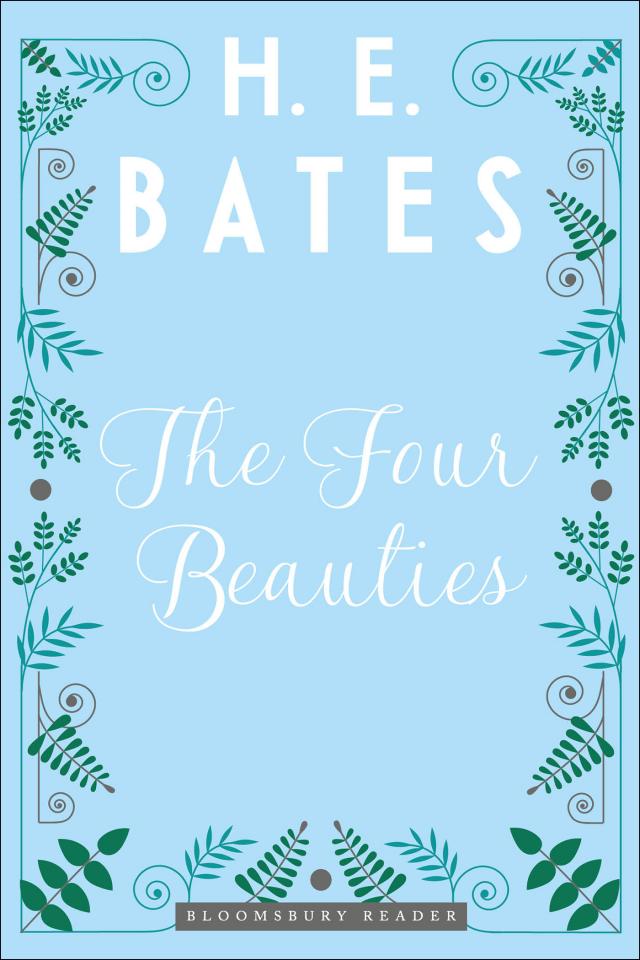
The Four Beauties

The Four Beauties

H. E. Bates

H. E. Bates

First published in 1968, The Four Beauties is Bates's last collection of novellas offering a mixture of comedy, adventure, a semi-autobiographical piece and an exploration of a dark love triangle.'The Simple Life' is set at a country cottage offering the joys of a humble existence, and focuses on a bitter alcoholic wife who finds temporary pleasure in a seventeen-year-old boy.A reminiscence of newspaper reporter, reflecting Bates's own experiences at the Northamptonshire Chronicle, 'The Four Beauties' concerns the narrator's complicated relationship with three lovely and highly-sexed daughters, as well as their mother. A television adaptation Country Matters was aired in March 1973.'The Chords of Youth' sees Bates revive the character of Aunt Leonora, first introduced in the 1965 story 'The Picnic', in this comic novella in which she entertains a visiting German, mistaking him for an old flame. Linguistic confusion, abundant food and wine, and a pompous...
Read online
  • 41
183