Second fiddle, p.20
Second Fiddle, page 20



‘He threatened once or twice, as people do.’ She took the list. ‘It’s all negative,’ she said. ‘He wasn’t keen.’
‘Perhaps he meant it, though.’
‘I took it to be histrionics when he threatened.’
‘As his mother did.’
‘She is not an easy mother; I don’t think he is an easy son. She is probably right to go home. If she or Ann had been really worried, they would have sent for help.’
‘They sent for you.’
‘But not official help. I should think Mavis worked everybody up. They were not to know that he had got pills and whisky; they obviously under the drama thought he was making a scene, then sulking.’
‘Which, in effect, he was.’
‘Yes.’
Silence reasserted itself. Laura seemed content to sit with her thoughts, but Martin felt a strangling desperation, a longing to shout and yell at her. He had waited so long to get to know her. What was going on in her mind? They had been up here hours, the world would wake up soon, he would lose his chance. He must take a risk. He said: ‘Do you think while we wait for young Claud to surface that you could pretend that you and I are alone in a compartment in a train?’
‘Why?’
‘On the assumption that strangers meeting in trains can speak intimately, since the odds are they are safe to speak the truth because they will never meet again.’
‘If you are bored, you can push off, go home, I am quite all right.’ (I do not need you, her voice implied.)
Martin ignored the snub. ‘What do you say to my suggestion?’ His tone indicated that she might be chicken.
‘Intimacy is not my genre,’ she said, yet the idea of the train appealed to her, it had an irresponsible attraction; perhaps this man would prove truthful. ‘All right,’ she said, ‘I’m game.’
‘Shall I begin? My name is Martin Bengough. My job in this country, which incidentally I have just chucked, has been to follow people like your conductor friend Clug when they visit and see that they don’t spy on military establishments and so forth, but stick to their allotted programmes.’
‘Jolly boring.’
‘Usually yes. With Clug one got music and the bonus of watching you.’
‘And discovering that I am not a military establishment.’
‘Exactly.’
‘Still pretty dire.’
‘My aunt Calypso Grant thinks it’s disreputable.’
‘A bit harsh. You have to live and as I remember there was more than one of you.’
‘Twelve of us.’
‘My, my! Twelve people to spy on poor little Cluggie! Is that what we pay taxes for? Gosh.’ Martin winced. ‘Sorry, go on.’
‘I was enchanted by you. I wanted to get to know you. When I passed Clug on to the next fellow for the last time, I doubled back here, made use of a silly ploy. I pretended to have lost my umbrella. I had left it in the concert hall on purpose. The caretaker girl told me that your mother would have it; this was splendid, I was able to come to your house, a legitimate excuse. You had been out with your parents, had difficulty with them when you arrived back—’
‘I remember. They were legless. You were most helpful. My mother bit you. She can be naughty.’
‘I bear the scar,’ said Martin.
‘And you knew the password for Bonzo.’
‘The caretaker girl had warned me that he was fierce, told me about the Eastbourne bit.’ Laura laughed. Was she relaxing? ‘There now, we have made a start on our train journey. Were you in love with Clug?’ Martin asked.
‘Lord, no.’ Laura was amused.
‘I rather thought not. You don’t allow yourself to fall in love.’ (He would not tell her that she had been watched at other times with other men.) ‘But you do go in for pleasure, I believe. Nobody gets hurt.’ Should he go on, or had he gone too far, too fast?
‘And?’ She gave nothing away.
‘You strayed from your norm with this one.’ He glanced at Claud. ‘Got hurt, probably. Feel responsible for him, perhaps?’
Bloody man, thought Laura, blast him, it all comes back, the struggle of a year exposed. She snapped, ‘What else?’ (What other truths would he dare to present her with?)
‘You never allowed yourself to marry or have children.’ He watched her face.
This self-confessed spy was aware of Nicholas and Emily yet she rather liked his open face with its honest grey eyes. He should have the guts to go on with the idiot game he had started. She hoped he was capable of hurdling the difficulties, or was he craven?
‘Is that all?’ she asked.
‘A précis.’
‘And?’
‘I hoped during the last year, which I have spent in the States, to forget you. When I got back I came down here looking for you. I have been and am obsessed by you.’ (Was she listening?)
Between them on the bed Claud emitted a porcine snort. Laura, pushing her thick hair back with one hand, leaned forward to stare at Claud. She said, ‘Yes?’
‘I didn’t expect to find you in these circumstances.’
‘No?’
‘Watching your ex-lover revive from a suicide attempt makes it rather harder to come out with a—an—er—’
‘What?’
(An offer, a suggestion, a proposition? What had he to offer?)
‘I thought you and I might—’
‘What?’
‘Love,’ said Martin. The word spoken out loud threatened them both.
Laura shrank into herself, drawing her knees up, hunching her shoulders as though a weight threatened to crush her.
Martin thought: We have here two failures, hers and mine. Could two failures constitute one success?
Laura said: ‘I would not suit you. I am emotionally parsimonious.’
‘Must it be so?’ Martin asked.
‘I am only half a person,’ Laura said gently, for he seemed an agreeable sort of man. Then she said: ‘I don’t think your train is getting us anywhere.’ Then more firmly she said, ‘I think I shall get off it now. I see no destination.’ Then she said, ‘Oh look—he is waking up.’
Claud had opened his eyes.
Claud, focusing on Laura, said, ‘Laura!’ in a surprised voice. ‘Great!’ and went back to sleep.
Martin thought Laura’s relief tangible. Her shoulders relaxed, she sighed, smiled, shook herself. ‘The longer he sleeps, the better,’ she said. ‘He’s okay now.’
Martin felt he must recapture her attention. While Claud slept she had at least listened. He asked sourly, ‘What happens when he finally surfaces?’
‘Gallons of tea and aspirin, and a boiling bath with ammonia in it. Could you organise that?’ She got to her feet. ‘Lord, I am stiff.’ She rubbed her knees, stretched.
‘Why the hell should I? He is your lover.’ Martin’s rage bubbled up. ‘Is that what you have been planning,’ he shouted, ‘while we have been sitting here? Why should I organise his bath? He’s nothing to do with me, he’s yours. I thought you were worrying whether he was going to die of alcoholic poisoning, that you were feeling remorse, minding about the stupid sod.’
‘All right, don’t run his bath,’ said Laura equably. ‘I was worried. I was thinking while we played trains and so on that it would not be too awful if he did die.’ She had shed her concerned appearance. She looked as he had first seen her in Clug’s company, relaxed, distant, self-contained and bloody attractive. Martin drew in his breath. ‘I must tell Mavis—or perhaps you would, oh no, you won’t, will you—to buy him another wastepaper basket, for he will destroy most of that.’ Laura pointed to the typescript on the desk. ‘Then he will carry on with his next book and life with Lydia. And it will be all to do again,’ she said. ‘Next time, next book, next rotten review, you’ll see.’
‘I shan’t see, I shan’t be here,’ said Martin loudly.
Laura did not appear to hear. ‘I shall apologise to Ann for lumbering her with such a dodgy lodger and she will defend him. She will make it clear that his behaviour is in some way my fault, that no good comes of an affair between a very young man and a woman old enough to be his mother, that I am to blame for this little caper. The same goes for Margaret. Oh,’ Laura swept her hair back from her face with both hands as her voice sank to a whisper, ‘I thought that if he should die, I would be free of him, but you can only get free of live people, that’s what resuscitation is about.’ She began to tremble.
Martin pushed her gently down on the edge of the bed and sat beside her.
They sat with their backs to Claud. Martin pretended not to see tears pouring from Laura’s eyes, dripping off her chin onto the black cotton jersey. He took her hand and held it. He said, ‘Let’s get back on the train for a bit.’
‘All right.’ She leaned sideways away from him and wiped her face on the sheet. Claud might not have been there. She stopped crying.
Martin said, ‘Did you seduce him or did he seduce you?’ He was painfully jealous.
‘I came up the ladder one day and got into bed with him. There was an element of surprise. It’s getting light outside, look, little pinkish clouds.’
‘Go on.’
‘I wanted to teach him how to make love. So many men never learn.’
‘You did that?’ Martin held her hand (it would not be difficult to put a pillow over Claud’s head and hold it there).
‘Yes. Listen, the birds are beginning to sing.’
‘Then what?’ (Better to let the bastard live.)
‘Then I found it was not all talk and sex, he could write. It was so good, I helped him burn the first draft. I got burned myself.’ She held her free hand up and turned it about. ‘There’s a scar somewhere.’
‘There will be.’
‘Then he fell in love with his girl. He truly loves her, she is part of him. He said if he got bad reviews, he would kill himself, suicide threats, tiresome emotional blackmail. Sitting here all night I have been thinking he’s a selfish bastard. It would not matter if he did die. I was so angry I almost wanted him to. I knew he wouldn’t, that he was merely stupefied with whisky and there was Lydia absolutely alive and perfectly sober.’
‘Were you perhaps feeling guilty for seducing him?’
‘No! We had a lovely time. How could I feel guilty about that? Wishing him dead, which I did for other reasons, is betrayal, though.’
‘I wish,’ said Martin, ‘that you would give me the chance of betraying you.’
Laura looked astonished. ‘Why?’
‘You haven’t taken in a word I said,’ Martin yelled. ‘I love you, I want you. I want to stop you wasting yourself on this ass.’ He glanced contemptuously over his shoulder at Claud.
‘But I have,’ said Laura. ‘I thought that was obvious. All I have had this night is a small hiccup of responsibility.’
‘I thought you were torn in two.’
‘It isn’t being torn in two that matters, it’s being shredded into little pieces so that you can never get back together, that matters.’
‘And you are back together?’
‘Yes. I am.’ She seemed wonderfully calm now, cheerful.
‘What about me? Give me a chance to love and betray,’ (or play the clown) ‘please.’
‘No chance. I am getting off your train.’ She was friendly, cheerful, composed. Perhaps he had not seen her weep? She was slipping away from him, he had never held her. ‘Listen to the birds,’ she said. ‘It’s time for me to be off.’
‘God! I feel awful! Woeful, oh,’ cried Claud. ‘Ouch! I feel terrible.’
Laura leaned over Claud. Suddenly exasperated, she said: ‘I bet you do. Listen to this, Claud. You have written a bloody good book, stop whingeing about one idiotic review and get on with the next. Tear up what you have written so far. Got that?’
Claud nodded and, since nodding hurt his head, groaned.
Laura stretched her arms above her head. ‘Right, then. I’ll send Mavis up with tea. If she’s not awake she should be.’ She moved to the trap-door. Martin followed her. She started down the ladder. ‘Goodbye, Claud,’ she shouted, ‘goodbye.’ She jumped the last yard of ladder and began running down the stairs. ‘Wake up, Mavis.’ She banged on Mavis’ door. ‘Wake up, it’s over to you.’
Martin could hardly keep up, she ran fast, leaping two steps at a time. ‘See Mavis swamps him with tea,’ she shouted over her shoulder, ‘and get aspirin from Ann.’ She had reached the hall and was fumbling with the latch, opening the front door. ‘Dear God!’ she cried, ‘I forgot my cat was in the car. How could I have forgotten her? Oh, puss, you have made a mess and no wonder, who could blame you?’ She let the cat out of its basket and tipped the contents into the gutter. ‘Oh, hell and damnation!’ she exclaimed. ‘It can’t be true! I left Helen’s Apollo’s hand in London. I shall have to post it.’ Then, noticing Martin standing at a loss, she snapped, ‘Why have you not put the kettle on? Claud is dehydrated, he needs tea.’
‘He can wait another few minutes. Where are you going?’ Martin raised his voice. He was thirsty and tired by the long watch, desperate.
‘Back to London. He needs tea,’ Laura reiterated.
‘Fuck his tea.’
‘Oh!’ Laura began to laugh. ‘Oh-ho-ho-ho-ho.’
Martin caught her wrist. ‘There’s a delightful restaurant about ten miles from here in an old watermill. There’s a stream. Will you come there with me? We could have breakfast?’
She freed her wrist. ‘I got off that train,’ she said. ‘Go on, put the kettle on, he’s dehydrated.’
Martin watched her car dwindle down the street. He thought, I shall not go on with this, as though the decision to part company was his. There was nothing to build on except imagination.
About the Author
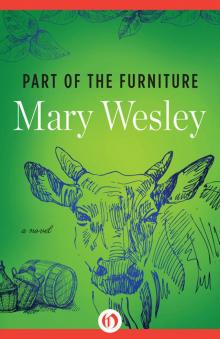
Mary Wesley (1912–2002) was an English novelist. After she published her first novel at age seventy, her books sold more than three million copies, many of them becoming bestsellers. Her beloved books include Jumping the Queue, The Camomile Lawn, Harnessing Peacocks, The Vacillations of Poppy Carew, Not That Sort of Girl, Second Fiddle, A Sensible Life, A Dubious Legacy, An Imaginative Experience, and Part of the Furniture, as well as a memoir, Part of the Scenery.
All rights reserved, including without limitation the right to reproduce this ebook or any portion thereof in any form or by any means, whether electronic or mechanical, now known or hereinafter invented, without the express written permission of the publisher.
This is a work of fiction. Names, characters, places, events, and incidents either are the product of the author’s imagination or are used fictitiously. Any resemblance to actual persons, living or dead, businesses, companies, events, or locales is entirely coincidental.
Copyright © 1988 by Mary Wesley
Cover design by Linda McCarthy
978-1-4804-5061-5
This edition published in 2013 by Open Road Integrated Media, Inc.
345 Hudson Street
New York, NY 10014
www.openroadmedia.com
MARY WESLEY
FROM OPEN ROAD MEDIA
Find a full list of our authors and
titles at www.openroadmedia.com
FOLLOW US
@OpenRoadMedia
Mary Wesley, Second Fiddle