Extraordinary

Extraordinary

David Gilmour

David Gilmour

Over the course of one Saturday night, a man and his half-sister meet at her request to spend the evening preparing for her assisted death. They drink and reminisce fondly, sadly, amusingly about their lives and especially her children, both of whom have led dramatic and profoundly different lives. Extraordinary is a gentle consideration of assisted suicide, but it is also a story about siblings—about how brothers and sisters turn out so differently; about how little, in fact, turns out the way we expect. In the end, this is a novel about the extraordinary business of being alive, and it may well be David Gilmour’s very best work of fiction to date.
Read online
  • 70
The Film Club

The Film Club

David Gilmour

David Gilmour

From the 2005 winner of the Governor-General's Award for Fiction and the former national film critic for CBC television comes a delightful and absorbing book about the agonies and joys of home-schooling a beloved son. Written in the spare elegant style he is known for, "The Film Club" is the true story about David Gilmour's decision to let his 15-year-old son drop out of high school on the condition that the boy agrees to watch three films a week with him. The book examines how those pivotal years changed both their lives. From French New Wave, Kurosawa, and New German cinema, to De Palma, film noir, Cronenberg and Billy Wilder, among many others from world cinema, we read about key moments in each film, as the author teaches his son about life and the vagaries of growing up through the power of the movies. Replete with page-turning descriptions of scenes and actors and directors, the narrative is framed with the tender story of his son's first bittersweet first loves. This is...
Read online
  • 67
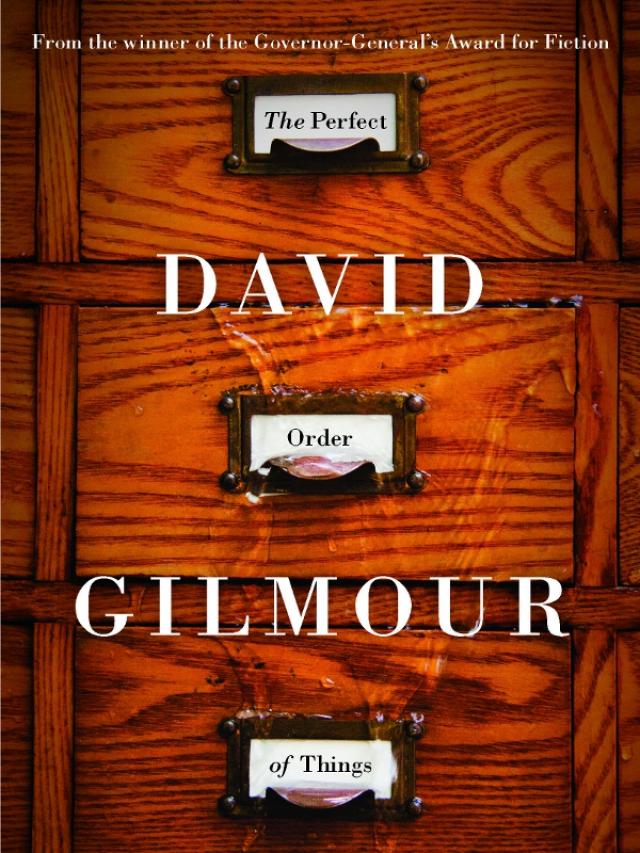
The Perfect Order of Things

The Perfect Order of Things

David Gilmour

David Gilmour

ReviewA Globe and Mail Top 100 Books for 2011“...a masterpiece of irony, subversive humour and astonishing self-mockery.... Gilmour handles his material with style and finesse, with a delicious sense of irony and with a creative jouissance. Here is a novel that gleams with intelligence,humour and wickedly precise observation.” (Globe and Mail )“...The Perfect Order of Things is so easily read, it adds a level of accessibility to the genre the others can’t match.” (Toronto Star )“...Gilmour’s sensitive and cultivated nurturing of narrative provides a pleasure beyond words.” (Edmonton Journal ) About the AuthorDavid Gilmour is a novelist who has earned critical praise from literary figures as diverse as William Burroughs and Northrop Frye, and from publications as different as the New York Times to People magazine. The author of six novels, he also hosted the award-winning Gilmour on the Arts. In 2005, his novel A Perfect Night to Go to China won the Governor General’s Award for Fiction. His next book, The Film Club, was a finalist for the 2008 Charles Taylor Prize. It became an international bestseller, and has sold over 200,000 copies in Germany and over 100,000 copies in Brazil. He lives in Toronto with his wife.
Read online
  • 51
Lost Between Houses

Lost Between Houses

David Gilmour

David Gilmour

Review"In its riveting evocation of teenage angst, Lost Between Houses recalls J.D. Salinger's classic Catcher in the Rye...Funny, surprisingly moving." -Maclean's"Lost Between Houses is strongly reminiscent of Catcher in the Rye, and in fact I would go so far as to say it offers many improvements on it.-- Gilmour captures so many aspects of adolescence so well using the almost old-fashioned materials of interesting characters, carefully wrought scenes, sharp dialogue and genuine observations into human nature.... This book...is literature." -*The Toronto Star"Gilmour gives us an empathic, intelligent, and compelling narrator--The range of experiences and emotions Gilmour manages to convincingly and thrillingly express through Albright amazed me again and again--So many of the story threads and recurrent images come together so devastatingly well at the end of this book that my breath was taken away repeatedly." -National PostFrom the Trade Paperback edition.Product DescriptionLost Between Houses is about a turbulent year in the life of Simon Albright, a fifteen-year-old private school boy struggling to be his sophisticated mother's best friend, the rebel his girlfriend adores and the son his father respects. Which is a hard act to pull off when your mother is distracted, your girlfriend too beautiful and your father in and out of a mental institution. Lost Between Houses unfolds with mingled sarcasm, grief and awe, and grips the reader until its startling climax.From the Hardcover edition.
Read online
  • 28
The Pursuit of Italy

The Pursuit of Italy

David Gilmour

David Gilmour

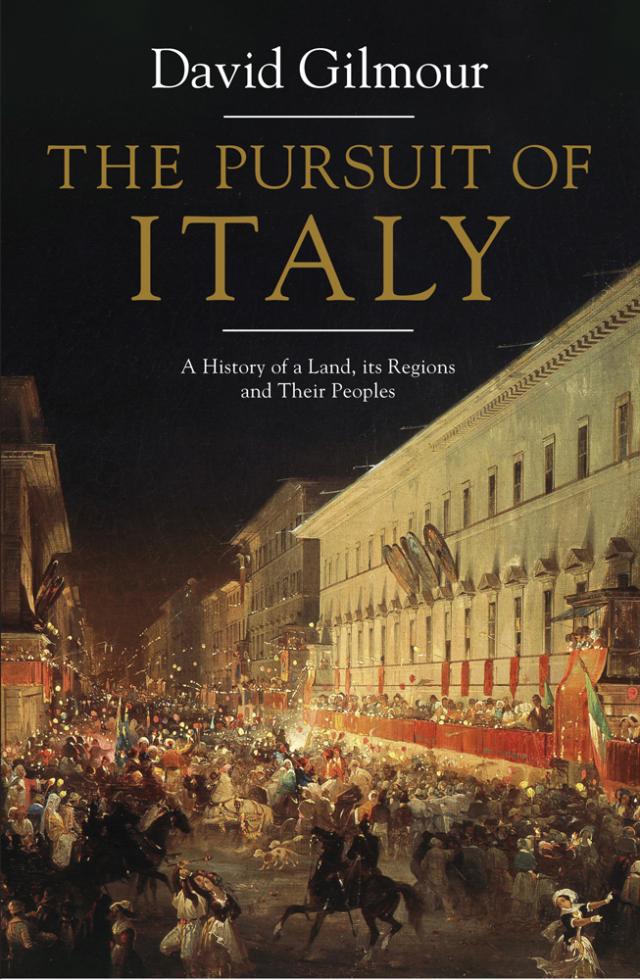
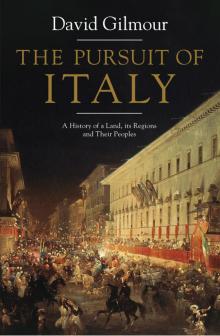
Visiting a villa built by Lorenzo de Medici outside Pisa, David Gilmour fell into conversation about the unification of Italy with a distinguished former minister: ''You know, Davide,' he said in a low conspiratorial voice, as if uttering a heresy, 'Garibaldi did Italy a great disservice. If he had not invaded Sicily and Naples, we in the north would have the richest and most civilized state in Europe.' After looking cautiously round the room he added in an even lower voice, 'Of course to the south we would have a neighbour like Egypt.'' Was the elderly Italian right? The Pursuit of Italy traces the whole history of the Italian peninsula in a wonderfully readable style, full of well-chosen stories and observations from personal experience, and peopled by many of the great figures of the Italian past, from Cicero and Virgil to Dante and the Medici, from Cavour and Verdi to the controversial political figures of the twentieth century. The book gives a clear-eyed view of the Risorgimento, the pivotal event in modern Italian history, debunking the influential myths which have grown up around it. Gilmour shows that the glory of Italy has always lain in its regions, with their distinctive art, civic cultures, identities and cuisine. The regions produced the medieval communes and the Renaissance, the Venetian Republic and the Grand Duchy of Tuscany, two of the most civilized states of European history. Their inhabitants identified themselves not as Italians, but as Tuscans and Venetians, Sicilians and Lombards, Neapolitans and Genoese. This is where the strength and culture of Italy still comes from, rather than from misconceived and mishandled concepts of nationalism and unity. This wise and enormously engaging book explains the course of Italian history in a manner and with a coherence which no one with an interest in the country could fail to enjoy.
Read online
  • 22
155