The Daring Dozen

The Daring Dozen

Gavin Mortimer

Gavin Mortimer

In this new book, Gavin Mortimer reveals the 12 legendary Special Forces commanders of World War II. Prior to the war, the concept of 'special forces' simply didn't exist, but thanks to visionary leaders like David Stirling and Charles Hunter, our very concept of how wars can be fought and won has totally changed. These 12 men not only reshaped military policy, but they led from the front, accompanying their troops into battle, from the sands of North Africa to jumping on D-Day and infiltrating behind enemy lines. Mortimer also offers a skilful analysis of their qualities as military commanders and the true impact that their own personal actions, as well as those of their units, had on the eventual outcome of the war.
Read online
  • 46
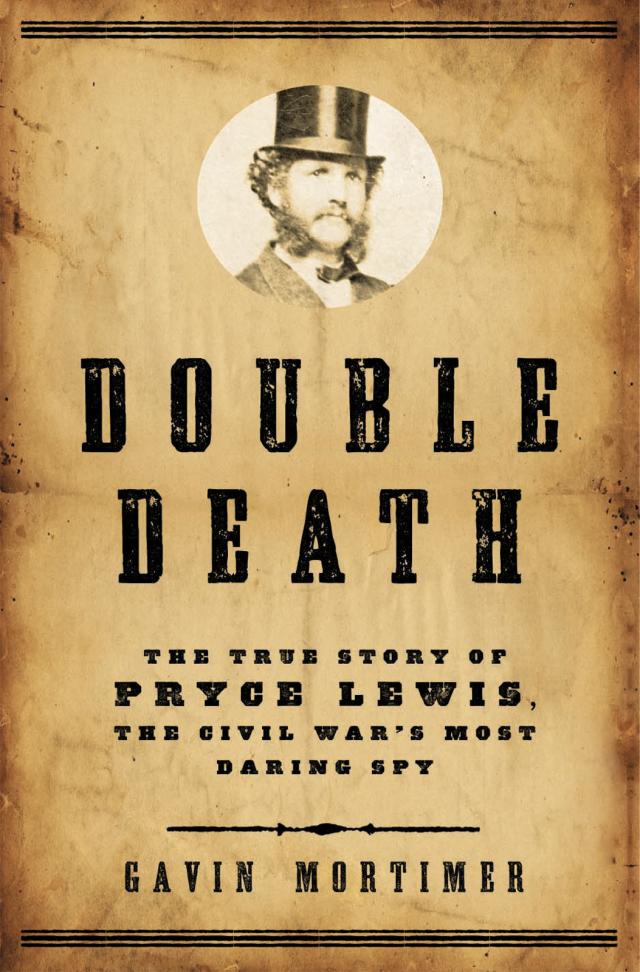
Double Death

Double Death

Gavin Mortimer

Gavin Mortimer

After an elderly man jumped from New York's Pulitzer Building in 1911, his death made the front page of the New York Times: "World Dome Suicide a Famous War Spy." By then Pryce Lewis had slipped entirely offstage; but, as Gavin Mortimer reveals, the headline did him justice, speaking to the dramatic, vitally important, and until now untold role he had played in the Civil War. Emigrating to the United States in 1856, Lewis was soon employed as an operative by Allan Pinkerton in his newly established detective agency. Early in the Civil War Pinkerton offered the agency to President Lincoln as a secret service, spying on Southern forces and insurrectionists. Civilian spies proved crucial to both sides early on; indeed, intelligence gathered by Lewis helped give the Union army its first victory, three days after the defeat at Bull Run. Within a year, though, he and fellow Brit Timothy Webster, another Pinkerton operative, were captured in Richmond, and their high-profile trial and...
Read online
  • 21
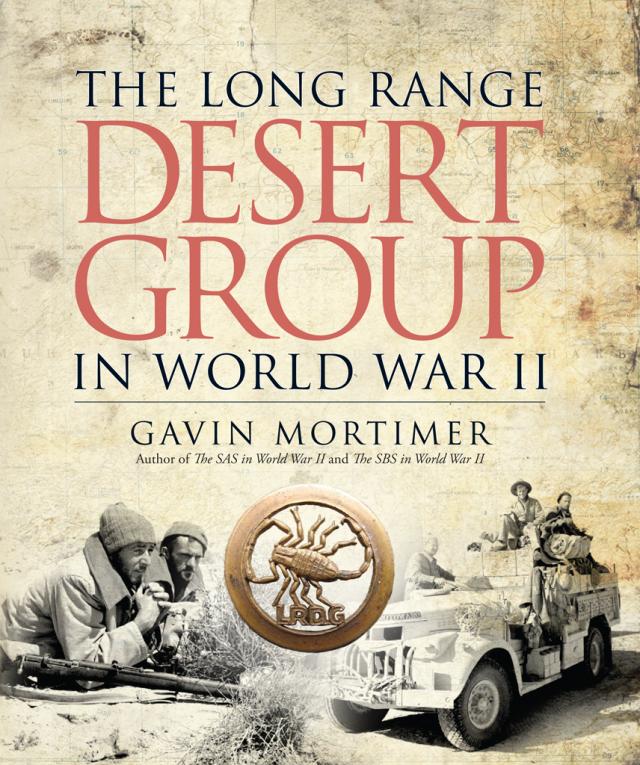
The Long Range Desert Group in World War II

The Long Range Desert Group in World War II

Gavin Mortimer

Gavin Mortimer

Established in June 1940, as the brainchild of scientist and soldier Major Ralph Bagnold, a contemporary of Lawrence of Arabia, the Long Range Desert Group (LRDG) allowed the British Army to gain a crucial advantage in the North African Front of World War II.Traversing great swathes of the desert that had never before been explored by Europeans, the LRDG was able to launch hit-and-run raids against remote enemy targets such as the fort and airfield at Murzuk. From December 1941 until the end of the Desert War in May 1943, the LRDG carried out numerous missions in tandem with the Special Air Service, using their unparalleled knowledge of the desert to navigate the SAS to enemy airfields on which attacks would be launched. As well as in Africa, the LRDG also fought in the Aegean, undertaking numerous dangerous missions in Yugoslavia, Albania, Italy and Greece, displaying their extraordinary versatility by operating in boats, on foot and by parachute. Using...
Read online
  • 16
Chasing Icarus

Chasing Icarus

Gavin Mortimer

Gavin Mortimer

In October of 1910, only four years before the outbreak of WWI, the precursor of the U.S. Air Force had one plane and a couple of dirigibles. Nobody knew which form of flight would predominate: planes, dirigibles, or balloons. And for a period of 17 days that month, this question was on prime display. The dirigible America, captained by Walter Wellman, was trying to cross the Atlantic. At horse racing tracks from Belmont Park in New York to California, huge crowds watched airplanes race above the ovals. And from St. Louis, ballooning teams from around the world took off in pursuit of the Bennett International Balloon Cup, given to the balloon that travelled the furthest distance. The dramatic denouement featuring Americans Alan Hawley and Augustus Post would stun the country. Newspapers, even in the smallest of towns, kept their readers informed of all the latest aerial accidents and international squabbles. The public treated aviators of all kinds like matinee idols.
Read online
  • 12
155